 Login
Login 
Watch: Closing Africa’s Youth Skills Gap Starts With Systems
- 17 Sep 2026
Tl;dr
ALX's Ruby Igwe told CNBC Africa's Power Lunch West Africa that Africa's youth aren't the problem, the systems around them are. Governments, employers, development institutions and training providers all need to build faster pathways from skills to opportunity. Watch the full segment here.
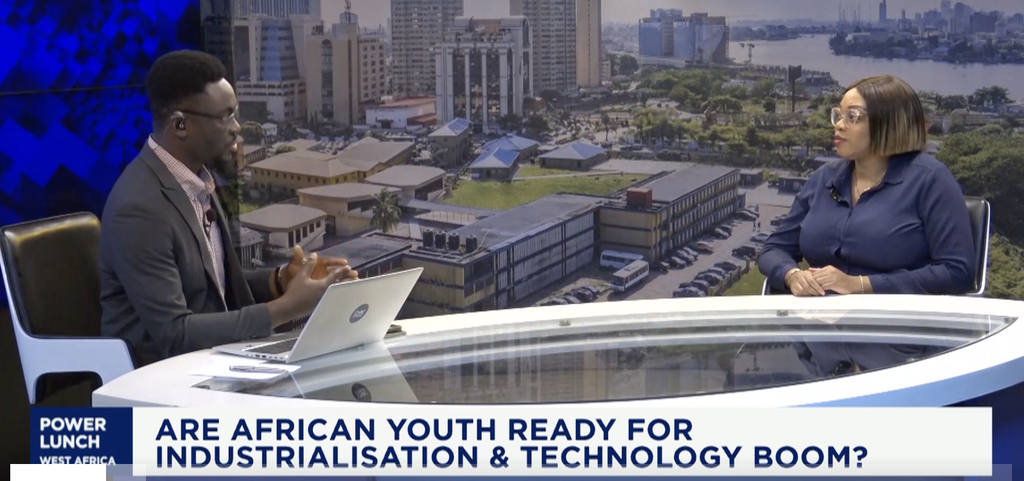
Africa's young population is often called one of the continent's greatest advantages, especially as industrialisation, AI, and digital transformation reshape economies worldwide. The conversation usually starts with the same question: are African youth ready?
Speaking on CNBC Africa's Power Lunch West Africa, Ruby Igwe, Regional Director for West and Central Africa at ALX Africa, pushed back on that framing. Across the continent, young people are already building digital skills, joining global teams, launching businesses, and finding work in the gig economy.
From ALX's experience training more than 350,000 people across data, AI and technology, Ruby argues that the real gap lies in what happens after young people build these skills, in the systems meant to absorb and grow that capability.
Does Africa Have a Youth Readiness Problem?
Ruby's first point turns the familiar question around. Young Africans are already learning, adapting and participating in the digital economy. Readiness may not be the thing worth measuring anymore.
"The question isn't only if they are ready, but if the systems are ready to build on what's already working and to scale their impact," she said.
Without infrastructure, jobs, capital, and clear career pathways, skills lose much of their value. Realising Africa's demographic advantage means building economies that can absorb and multiply the potential of young people already gaining skills.
Who Is Responsible for Preparing Africa's Talent?
The shift from learning to opportunity can't sit with young people or training organisations alone. Ruby pointed to an ecosystem where governments build the right infrastructure and policy, development institutions fund approaches that work, and learning providers keep widening access to relevant skills.
Employers carry an equally important role. A skills gap is hard to solve when businesses can't clearly name the capabilities they need or build real entry points for early-career talent.
For employers, that means moving past conversations about talent shortages and asking a sharper question: what real pathway have we built for emerging talent to enter, contribute and grow?
Why Is Technology Now Part of Every Career, Not Just Tech Jobs?
One of the sharpest points from the conversation was the distinction that technology is becoming part of every career, not a career path on its own.
Manufacturing is integrating AI and automation. Finance needs data capabilities. Marketing professionals work with AI-powered tools. Agriculture and logistics are going digital too.
Ruby's argued that the advantage will belong to people who combine knowledge of their field with technological fluency. Preparing Africa's workforce for the next phase of industrialisation means more than training technology specialists. It means helping accountants, marketers, entrepreneurs, manufacturers, and professionals across industries use technology to work better in the roles they already hold.
Africa's young people are already learning and adapting. The systems around them now need to move at the same pace.
Watch Ruby Igwe's full conversation on CNBC Africa's Power Lunch West Africa.

FAQ
Is Africa's youth readiness the real barrier to economic growth?
Not on its own. ALX's Ruby Igwe argues that young Africans are already building digital skills and participating in the economy, so the bigger question is whether governments, employers and institutions have built systems to absorb and scale that capability.
Who is responsible for closing Africa's youth skills gap?
Closing the gap takes shared effort: governments build infrastructure and policy, development institutions fund what works, learning providers widen access to skills, and employers create real entry points for early-career talent.
Does every career now require technology skills?
Largely, yes. From manufacturing to finance to marketing, most industries now depend on some level of digital or data fluency, which means preparing Africa's workforce means building tech skills across every profession, not training tech specialists alone.