 Login
Login 
Built in Africa, Made to Compete Globally: Henry Davy Luc Rulinda’s Story
- 24 Jun 2026
In May 2023, Henry Davy Luc Rulinda was a civil engineering student at the University of Rwanda, working a full-time job as a Help Desk Analyst while managing his degree. Tech was where he wanted to be, not because he was fleeing something, but because he could see clearly what skills that travel across borders look like and he did not yet have them.
He joined ALX's Data Science programme that same month. By June 2024, while still finishing his degree and working a second role as a Data Analyst Intern, he had secured his first Canada-based position as a Technical Support Specialist at Invisible Technologies. Less than a year later, in May 2025, he moved into his current role as an Information Systems Analyst at Altria, a global company operating across North America.
Henry did not wait for the world to come to him. He built the credentials that would let him move.
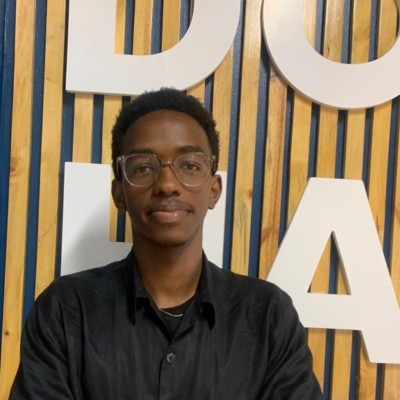
From Civil Engineering to a Tech Career in Canada
The version of the before state that gets softened in most career narratives is the texture of the thing: how much was running at once, how little room there was for error.
Henry was balancing three tracks simultaneously: a civil engineering degree, a full-time Help Desk role, and the ALX Data Science programme, which has a notoriously rigorous curriculum. He was not doing this because he had nothing else going on. He was doing it because he had decided that the trajectory he was on needed to change, and he was willing to hold it all together long enough to make that happen.
"I chose tech because it's where I could have a bigger and better impact," he said. "What I've learned is that real growth comes from two things: being intentional about where you're going and having the grit to do the work even when it's hard. I have ALX to thank for that. Every learning opportunity matters not just for the sake of it, but because skill compounds."
That last phrase is worth sitting with. Skill compounds. It perfectly describes exactly what happened. The Data Science programme gave him the analytical foundation. The internship at Figaro Consulting put it to work. The Cloud Computing programme he enrolled in next extended the credential set into a second high-demand area. By the time he applied to roles in Canada, he was not presenting a single skill. He was presenting a stack of experience, skills, and determination.
How African Tech Credentials Open Doors with Global Employers
Henry is precise about what made the difference in getting hired: it was the ALX certificates. Not his engineering degree. Not his years of working experience (though that surely mattered.) The certifications were the signal that moved him from the pile to the room.
"The certificates became the biggest factor in getting hired in tech, more than my academic background," he said.
This is a significant detail for anyone watching the African talent conversation. The argument that African qualifications are not legible to international employers is real. It is also addressable. Credentials that signal a specific, verifiable skill set — built to a standard that employers outside the continent recognise — change the equation. They are not the only thing that matters, but they are often the thing that gets someone in the door.
Henry's first Canada role at Invisible Technologies was not an entry-level posting in the narrow sense. He was supporting cloud engineering teams, automating incident reporting with Python, and managing escalations using data tools. The work he was doing in Rwanda had prepared him for work he was doing in Canada. That transfer is not accidental. It is what well-designed technical training looks like when it takes the global labour market seriously.
What Building a Global Tech Career from Africa Actually Looks Like
Henry's story does not follow the arc of someone who got lucky or found a shortcut. It follows the arc of someone who identified what was needed, assembled it systematically, and moved when the conditions were right.
He had to hold a lot together at once. He had to be deliberate about which skills to build and in which order. He had to complete two demanding programmes while working and studying, and then apply what he built before the ink was dry on his certifications.
There is nothing in that story that is unique to Rwanda. The combination of intentionality, technical rigour, and willingness to do the work while everything else is also happening is a clear pattern. It shows up across the ALX network, in Ethiopia, Nigeria, South Africa, Ghana, Morocco, and the other markets where more than 350,000 graduates have now built careers.
Africa has produced a workforce that competes globally. Henry Rulinda is not an exception to that claim. He is an example of it.
"Every learning opportunity matters not just for the sake of it but because skill compounds." — Henry Davy Luc Rulinda, Information Systems Analyst, Canada
African Tech Talent is Competing Globally — And Winning
Henry's path from Kigali to Canada is a specific story, but the conditions that made it possible are not specific to him. Across ALX's network across the African continent, more than 350,000 graduates have built successful careers using the same combination of rigour, credentials, and deliberate effort that took Henry from a university help desk to an IS Analyst role at a North American company.
The global tech labour market has a skills problem. Employers across North America, Europe, and the Gulf are looking for people who can work with data, manage cloud infrastructure, and apply technical thinking to real operational problems. Those people are graduating from ALX programmes across the African continent every year.
What Henry's story demonstrates is that the distance between African talent and global opportunity comes down to credentials and positioning. When those two things are in place, the outcomes follow. He is working in Canada today because he built something in Africa that the world needed.
If you are ready to build a global career, start here.